
Illinois’ outdated sentencing laws sharply limited members of our campaign from earning sentencing credits, even as they grew, changed, and worked to build a better future. In their own words, they share what that loss has meant for them and for the families waiting for them to come home.

I never was able to earn day for day credits due to my sentence, but I sat down and figured out what my release date might have been. I would’ve been able to spend time with my beloved aunt who passed at 99 and who always believed in my release. I missed my daughter’s high school and college graduation. I miss countless birthdays and Christmases. Because I was never able to earn days I was ineligible for a pre-release program, so after 37 years, I found myself at a shelter, unable to even use a cell phone. What would being able to earn days off of my sentence by participating in programs have meant to me? The world.
James Warren
My sentence of 15-years at 85% is considered a blessing where most of my peers have a sentence of 30+ years at 85 or 100%. While there are many victims (mine included) that seek leniency for the person that harmed them, Truth-In-Sentencing (TIS) takes away that possibility by imposing strict mandatory minimums. Legislators often paint lenient victims as being over-represented “non-victims”, dismissing the way these victims experience harm while also dismissing their version of justice. In addition, TIS represents an inherently destructive incentive structure.
When you live in an environment where despair is in the air on a daily basis and there are limited pathways to educate and better yourself (school, programming, etc.), how does hope factor in? Without being able to earn time off your sentence through good behavior, there is no incentive to be patient and wait your turn to get into school/programming (which is prioritized by outdate; those with the most time being placed on the back burner), nor is there incentive to stay focused and finish once you are admitted, as trouble of any kind can get you kicked out. There is no incentive to turn the other cheek when confronted by an aggressive corrections officer, a healthcare worker with a stressful caseload, or another frustrated incarcerated person. In essence, no incentive to become a better person.
Instead of being incentivized toward a growth mindset (learn and grow as much as I can while incarcerated in order to go home a better person), the current incentive is to adopt a fixed mindset (I’m not going home so I need to set a pattern of no tolerance). In practice this incentive structure actively contributes to daily violence, drug abuse/overdoses, and suicides of both incarcerated people and staff, as TIS is a construct that’s more likely to break and decimate than build up or rehabilitate.
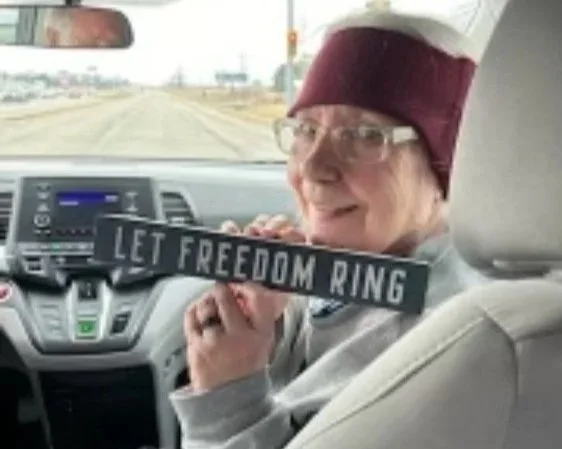
Paula Sims
Sandra Brown
25 years ago, I was sentenced to 22 years at 100 % because of Truth in Sentencing; because my judge lacked the authority to exercise the discretion to temper justice with mercy. He stated that although he did not think I was a criminal, the law did not provide him the ability to impose what he felt was a more appropriate sentence. Consequently, I found myself languishing on waitlists for school and other sentence-based credit programs. I could work in the very spaces assisting others who qualified for sentence credits, help others earn sentence credits, but could not earn sentence credits myself due to the “nature of my conviction” under Truth in Sentencing. Even after legislation changed that allowed people serving lengthy sentences to earn credits, this legislation arbitrarily excluded people with the same conviction serving time under TIS.
This disparity nullifies Article 2:11 of the Illinois Constitution regarding justice and incarceration by essentially denying those sentenced under TIS “restoration to useful citizenship.” Despite TIS, I became the first woman in Illinois history to earn a master’s degree while incarcerated and the first to be admitted into a doctoral program. I now provide professional development training to systems workers nationally, go into the very facilities that once housed me, run programs for women serving lengthy sentences, and sign the very contracts I wasn’t allowed to earn.
I returned to the free community four years ago and am the embodiment of what true public safety and second chances look like. Credit for Change stands not only to alleviate the injustice that comes with TIS but also dismantle current wait list policies that continue to lock out those who need and want programming but continue to wait for more inclusive policies.

Percell Dansberry
Due to the date I was sentenced the law restricts my ability to earn sentence credits. The system impact is harmful and dejecting to my family and friends (community). As they bared witness to my evolutionary transformation (growth/maturity/education) over the years, they have become hopeless. Seeing others released, and not their beloved, trying to articulate the arbitrary nature of the law is an impossibility, because to them the law acts as a blunt instrument that incessantly harms the soul: its truly incompressible to them. It is also a slight to their humanity, as well as to their citizenship as Illinoisans, because they feel as though the connective tissue that binds us are being totally ignored.
From personal experience I can honestly attest to the fact that freedom (sentence credits) is the most effective tool that any society can use to incentivize positive behavioral change, hopefulness, and productive citizenship. A system built on punishment only breeds resentment and recidivism (harm). The social conditions must change where I can answer my granddaughter’s most probing question, “Granddaddy, when are you coming home?” with an emphatic, “soon, I’m working on it, baby.” We are all interconnected, change on the inside means change on the outside. This is the hope that the Credit for Change campaign offers to society as well as my loved ones.


What would the opportunity to earn day for day credit have meant to me? It would have meant being able to spend time with my parents when they needed me the most. It would have meant my disabled brother not being put in a nursing home, but living with me. It would have meant spending time with my son before he passed. I would have been at his high school and college graduations. He passed at 27 at the hands of a drunk driver. I would have received the proper medical care for my fractured spine instead of Tylenol from commissary.
No words can express how much it would have meant to have credit for all the academics, vocational and self classes I completed. I never got credit but I pray Credit for Change passes so others are able to get the credit they have earned and deserved.